
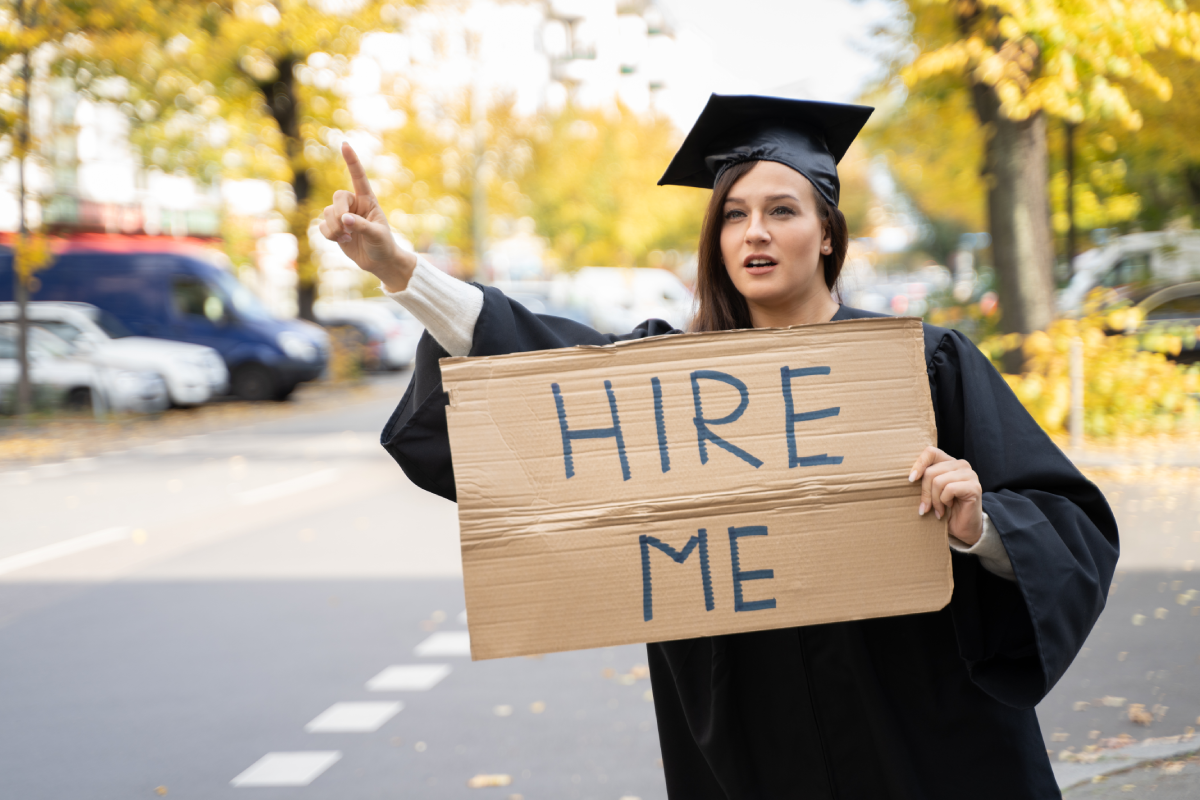
The recent report from the Strada Education Foundation and Burning Glass Institute reveals a disturbing trend: most U.S. graduates who start their careers in underemployment remain trapped in it for a decade. Around 73% of those who do not secure a college-level job in their first year of employment remain underemployed ten years later. This data sends a clear signal—our education system is falling short in equipping graduates for sustainable career success. The problem is not only about skills and degrees but about the connections students lack—their social capital.
For too long, we’ve focused exclusively on academic achievement, neglecting a critical element in economic mobility: who you know and how you leverage those connections. The opportunity gap is not just a skills gap; it’s a social capital gap.
We often hear that “your network is your net worth.” But as someone who’s been in workforce development for over 40 years, I believe that the opportunity cost of traditional networking is low social capital. Networking events, business card exchanges, and LinkedIn connections alone do not create the deep, meaningful relationships that lead to long-term career success. What graduates need, and what workforce programs must prioritize, is social capital literacy.
Social Capital: The Missing Piece in Economic Mobility
Social capital literacy teaches individuals how to build, measure, and maintain relationships with key stakeholders in their industry. Graduates who are unable to find college-level jobs are often missing critical connections that could open doors. Data shows that a graduate’s first job is crucial in determining their next 10 years of career trajectory and salary. Yet, when 52% of American graduates start their careers underemployed, it’s clear that we’re not preparing them adequately for the real world.
The typical solution has been to push students towards internships or work experience, which, as the report suggests, can significantly reduce underemployment. However, internships alone are not enough. We must also teach students how to tap into their existing networks—whether familial, educational, or professional—to amplify these opportunities and gain long-term access to career-level positions.
Why Workforce Programs and Schools Must Act Now
The stakes are too high for workforce programs and schools to ignore the importance of social capital literacy. Students and job seekers need tools to navigate the complex social dynamics of the workforce. They need to know who in their network can help them, how to engage those individuals effectively, and when to reach out for support. This isn’t just a soft skill—it’s a necessity for economic mobility.
Consider this: students who secure college-level jobs in their first year of employment are 3.5 times less likely to experience underemployment later. Social capital plays a crucial role in achieving this success, and yet we do very little to teach it. This gap between academic achievement and real-world outcomes is why we see over 50% of college graduates working in fields that don’t even require a degree.
A Call to Action for Workforce Programs and Schools
If we want to change these outcomes, we need to make social capital literacy a priority in workforce programs and schools. Here’s how we can do that:
Incorporate Social Capital Literacy in Curriculum: Teach students to map their networks, identify key stakeholders, and build meaningful, long-term relationships that will serve them throughout their careers.
Emphasize Industry Engagement Early: Schools and workforce programs must foster real connections between students and professionals in their desired fields through mentorships, industry-led workshops, and alumni networks.
Measure and Build Social Capital: Just as we track academic performance, we need to track students’ ability to connect with industry professionals. This could be through structured assignments, career-building workshops, and post-graduation support.
Develop Social Capital Assessments: Before students graduate, we should help them understand the strength of their existing social capital and how to improve it through targeted initiatives like internships, informational interviews, and peer networking.
The Bottom Line
The report’s findings are alarming, but they also present an opportunity for workforce programs and schools to rethink how we prepare students for the workforce. By prioritizing social capital literacy, we can ensure that graduates not only avoid underemployment but thrive in college-level jobs that leverage their skills and education. Our collective responsibility is to give them the tools to succeed, and social capital is one of the most powerful tools we can offer.
Social capital literacy is no longer optional—it’s a necessity.
Edward DeJesus is the founder of Social Capital Builders. You can learn more about us at www.socialcapitalsmart.ai