
Generations of opportunity have been stolen, not because people lack skills, but because they lack industry relationships. We talk endlessly about equity in education and employment, yet we ignore the one factor that truly levels the playing field: social capital. Equity is not just access to education—it’s access to relationships and having the training and support to build those relationships.
It’s ironic that for years, we’ve used the term “disconnected” to describe young people who are out of work and school, but the real, measurable disconnection isn’t just from employment and education—it’s from people. It’s from the individuals who have the power to open doors to opportunity, even those already within the young person’s network.
The Essential Element Your Equity Strategy Can’t Afford to Miss
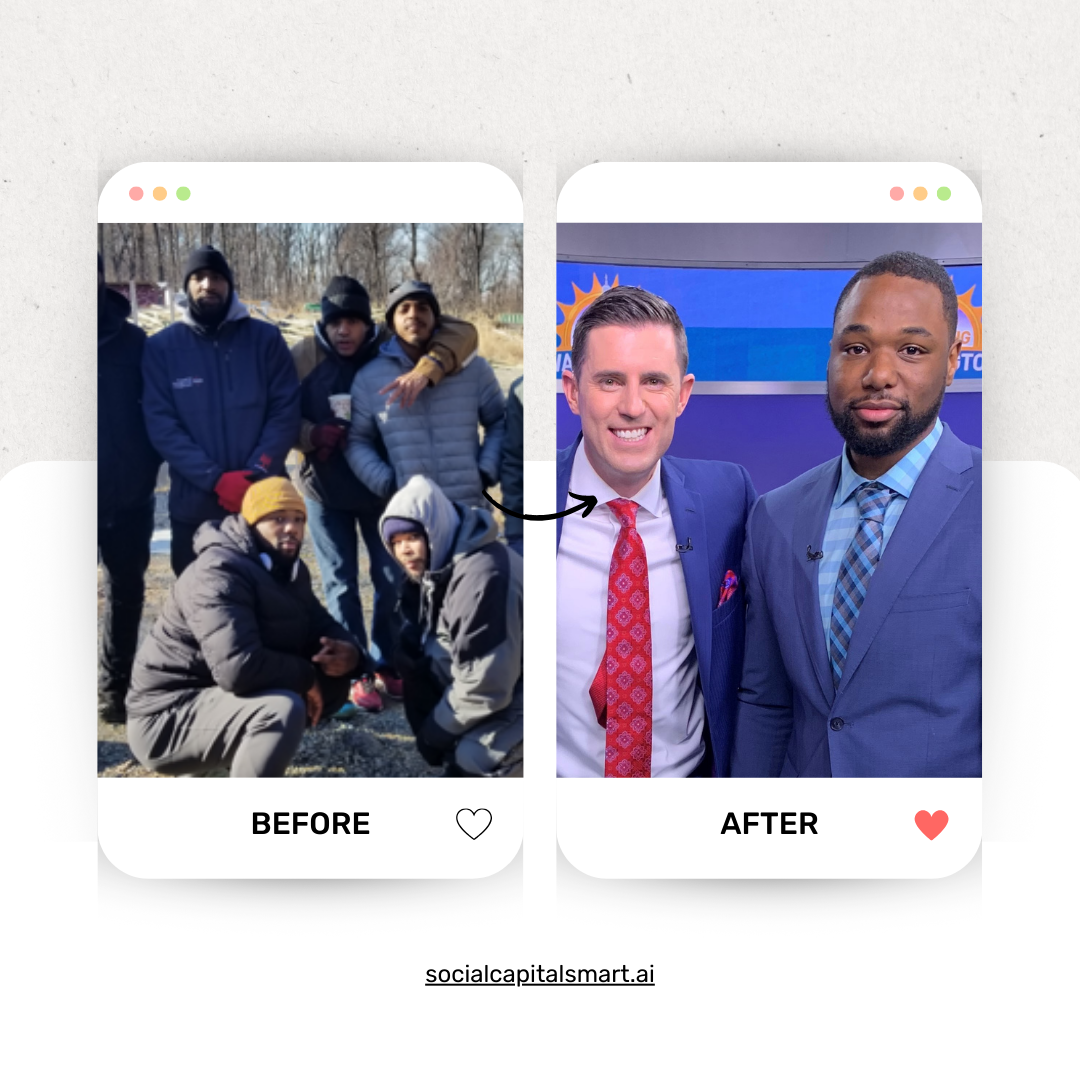
Consider the story of Nico. Once a bright yet disconnected young man who had faced incarceration, Nico joined our program with a clear goal: to build what we call “linking social capital.” Instead of just focusing on skills or credentials, Nico prioritized forming relationships with influential leaders in his community—city officials, industry mentors, and connectors who could open doors.
Three years later, Nico isn’t just surviving; he’s thriving. He earns six figures, not because of a college degree or credential, but because he understood how to leverage social capital to cross class lines and seize opportunities. Nico’s story is a blueprint for what’s possible, yet our workforce systems continue to neglect this critical component.
Here’s where we must be clear: social capital transcends mentoring. Mentoring often assumes a one-way transfer of knowledge or advice, typically from a senior to a junior person. While valuable, mentoring alone doesn’t dismantle systemic barriers. Most mentoring programs fail to equip mentees with the critical skills and knowledge to map opportunity networks and identify the patterns of relationships and resource flows that can shape their economic life outcomes so they dont need a mentor. Without this understanding, mentees often remain dependent on programs, unable to break cycles of disconnection and inequity.
Social capital, however, is about more than guidance—it’s about empowering individuals to build dynamic, reciprocal relationships that connect them to networks, opportunities, and influence. It’s about teaching youth how to create “Social Capital Investment Plans (SCIPs)” that leverage qualified bonding, bridging, and linking social capital assets within and beyond their communities. These plans target intentional relationship building with the people, groups, and organizations that hold the potential to transform economic trajectories.
The truth is stark: 80% of jobs are never posted—they’re filled through relationships. And yet, we funnel billions into skills training while leaving people disconnected from the individuals they need to succeed. This omission is not just a failure; it’s an injustice. Without access to social capital, education and workforce development alone cannot dismantle systemic barriers.
Social capital building provides a lifelong framework for navigating relationships and accessing resources. This approach transcends one-off interactions and instead builds an enduring ecosystem of opportunity. It recognizes that systemic barriers are not dismantled by advice alone—they require access, strategy, and the ability to forge meaningful connections across social and economic divides.
Policymakers, educators, and workforce leaders: If social capital isn’t part of your equity and economic strategy, you don’t have a strategy. The systems we’ve built perpetuate inequality because they focus on independence rather than interdependence.
The question is simple: In the New Year, will we continue to ignore the invisible threads that create opportunity? Or will we rise to the challenge and ensure that everyone—not just the privileged few—can access the relationships that change lives?
It’s time to make social capital building a pillar of workforce development and education. Because equity without relationships that radically transcend mentoring is no equity at all.